
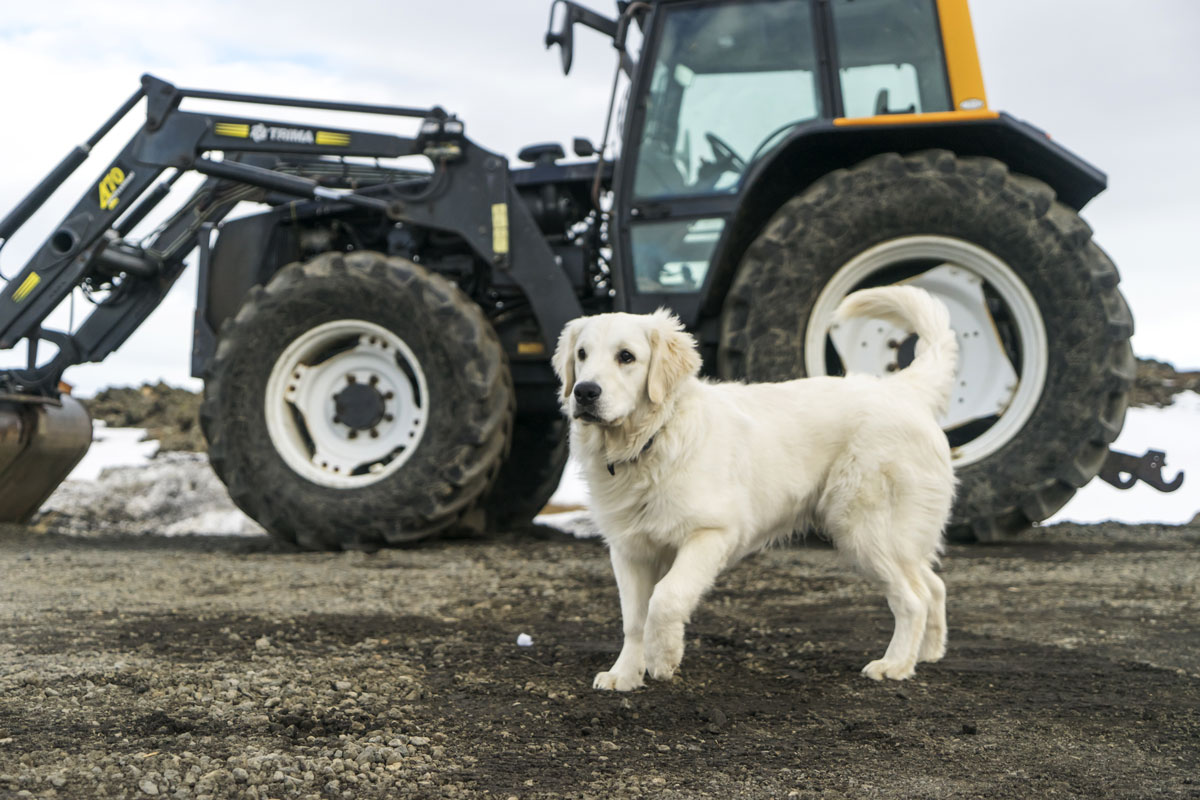
Harvest brings a specific set of hazards to farm dogs and cats. Rodent bait goes out as mice move toward buildings, antifreeze gets drained and topped off in the shop, grain and silage spoil in the pile, machinery runs late in low light, and gravel roads carry more traffic than any other time of year. The two hazards that kill fastest are rodenticide and antifreeze, and both are treatable if you call early.
Do not wait for symptoms with either one. If you think your dog or cat got into rodent bait, ate a poisoned mouse, or licked antifreeze, call Homestead Small Animal Practice at (712) 262-8990. That same number after hours gets you instructions on what to do next. Bring the product container or a photo of its label. With antifreeze, the window where treatment still works well is measured in hours.
Key takeaways
- Rodenticide is not one poison. Bring the container or a photo of the label, because treatment depends entirely on the active ingredient.
- A cat or dog can be poisoned by eating a poisoned mouse, not just by eating the bait.
- Antifreeze poisoning peaks in fall and winter, and the antidote works best within hours.
- Moldy grain, spoiled silage, and carcasses in the ditch cause tremors and seizures that come on fast.
- Calling before symptoms start gives your pet better odds and usually costs less than waiting.
Why does harvest change the risk?
From mid-September through November the farm turns into a different place, and the dog is the last one to know. Combines run fields he has always had to himself. Mice head for the buildings, so bait goes out. Radiators get flushed, grain spills and sits and gets warm.
Underneath all of it runs one pattern worth carrying away: almost nothing dangerous about harvest looks dangerous at first. Anticoagulant bait takes days to show itself. Antifreeze poisoning has a stretch in the middle where the animal seems to rally. A dog clipped by a grain cart gets up, shakes off, and trots back to the house. Owners who wait are not being careless, they are responding reasonably to an animal who looks fine, and eleven months of the year that instinct serves them well. October is the month it does not.
Rodent bait: the fall poison that hides in plain sight
Rodenticide is not one product, and that single fact drives everything else. According to the Merck Veterinary Manual’s overview of rodenticide poisoning, what sits on the shelf today includes anticoagulants, bromethalin, cholecalciferol, and phosphides. Anticoagulants stop blood from clotting and have a good antidote. Bromethalin swells the brain and has none. Cholecalciferol drives calcium up and takes out the kidneys. Same shed, same shelf, three very different emergencies.
Merck is also explicit that color, shape, and size will not tell you which one you are looking at, since those run alike across brands. So when we ask for the container, it is not fussiness about paperwork. Without the active ingredient we cover every possibility at once: more bloodwork, more days of treatment, a bigger bill, all for a dog who may well have eaten the one product with a clean antidote sitting in our cabinet.
Barn cat owners get caught a different way. Merck lists eating poisoned prey as a real route of poisoning, so a cat who never goes near a bait station can be poisoned by the mouse that did.
Anticoagulants hide longest. Every sign traces back to bleeding somewhere, and they surface days after the bait went down: tired, weak, off feed, bleeding from the nose, pale gums, breathing hard, sometimes limping on a leg bleeding into the joint. By then he has been poisoned most of a week. I would far rather see a bouncy dog on Monday than a pale one on Thursday.
Why antifreeze is the one we hate to see
Ethylene glycol tastes sweet and animals will drink it on purpose. The Merck Veterinary Manual notes that in cold climates these poisonings run seasonal, clustered in fall, winter, and early spring, exactly when radiators get flushed. Lethal amount: a few teaspoons for a dog, one to two for a cat. That is a puddle under a truck, or the wet spot on the shop floor nobody bothered with.
All of it comes down to the clock. Pet Poison Helpline puts the antidote window at roughly eight to twelve hours for dogs and about three hours for cats, and past that the outlook falls off a cliff. Three hours is nothing when the cat is out and nobody saw it happen.
Early on the animal looks drunk: wobbling, disoriented, throwing up, drinking and urinating more than usual. Then comes the part that fools people. They perk up. An owner sees a cat who was staggering at breakfast acting normal by supper and reasonably concludes it passed, when what has happened is that the first phase ended and the kidneys have quietly started to fail. If your pet is acting drunk and there is a vehicle or a shop floor in the picture, call while they still look bad. Waiting until they look bad again is waiting too long.
Can moldy grain or spoiled silage really hurt a dog?
Yes, and it catches people who have farmed their whole lives. Molds growing on spoiled feed put out compounds called tremorgenic mycotoxins. Merck’s entry on tremorgenic neuromycotoxicosis names silage and food waste among the sources and lists what they do to dogs: vomiting, tremors, wobbliness, a racing heart, seizures, usually within hours of eating.
So the spoiled crust on a silage pile counts, along with grain that sat and got warm, the compost pile, and the corner of the shed where last year’s mess never got swept.
The ditch belongs here too. A dog working a fenceline in October turns up carcasses, and a dead animal is two problems at once: rotten meat, plus whatever killed it, which this time of year is often bait. When somebody tells me their dog was gone twenty minutes and came back trembling, moldy feed and something dead are the first two things I ask about.
What comes home from the field
Trauma cases pile up during harvest for reasons nobody needs explained: blind spots, machinery loud enough that a dog never hears the second vehicle, work running past dark, and gravel roads carrying semis that are not out there in July. The dog who gets clipped and walks away is the one that worries me most. Internal bleeding, a bruised lung, a torn diaphragm: all three can look like a shaken-up animal who is basically fine, for hours. Same trap as the one in our post on the signs that mean your pet cannot wait, and it is the call owners talk themselves out of most.
Two smaller things ride home with the dog. Corn cobs do not soften and do not break down, so one that lodges in the small intestine stays put, and a dog retching over and over without bringing anything up should be seen that day rather than watched overnight. Grass awns are the other. Those barbed seed heads come off dry stubble and work into a paw, an ear canal, or a nostril, and the way the barbs lie, they travel inward instead of backing out. A sudden limp with licking at one foot. Violent sneezing out of nowhere. Head shaking that will not quit. After a field day, any of those usually means something is in there.
What should I bring when I come in?
For a suspected poisoning, three things change how fast we can work.
- The product container, or a photo of the label showing the active ingredient and EPA registration number. Most valuable thing you can hand us.
- Your best guess at how much and how long ago. Half a block, sometime after lunch, is genuinely useful.
- Anything your pet brought up, bagged. Vomit with bait fragments in it answers questions no test answers as fast.
Call on your way in rather than after you arrive, so we can have what your pet needs ready.
How do I harvest-proof my place?
Not by kenneling him for two months. By making a few decisions before harvest instead of during it.
- Keep bait containers and labels in one drawer in the shop, so nobody is hunting at nine at night.
- Use tamper-resistant stations where a dog cannot reach, remembering they do not stop a cat catching a poisoned mouse.
- Clean coolant spills immediately, cover the spot with absorbent material, and store coolant closed and off the floor.
- Sweep spilled grain, and keep dogs off the crust of a silage pile and out of the compost.
- Put a reflective collar or a light on any dog outside near equipment at dusk.
- Run your hands over the dog after a field day. Feet, between the toes, ears, armpits. Awns are far easier on day one than day five.
What we can handle here
Most of this gets worked up and treated right here, which matters when the difference between outcomes is measured in hours. Digital radiology on site with SignalPET consult support, ultrasound for the cases an X-ray cannot settle, our own bloodwork, the pharmacy stock these cases need, and three veterinarians on staff. Our radiology, ultrasound, and surgical services page has the detail, and you can meet the doctors and technicians who would be working on your animal. If I could get one thing across before harvest, though, it would not be about equipment: get established with a veterinarian while nothing is wrong. An animal we have already seen, with a weight and a history on file, is one we can move on immediately instead of starting from scratch at the worst possible moment.
Homestead is not a 24-hour emergency hospital, and I am not going to imply otherwise. Hours are Monday through Friday 7:30 to 5:30 and Saturday 7:30 to noon. Outside those hours, call (712) 262-8990 and you will get instructions on what to do next.
When to call the vet
Call (712) 262-8990 now, before symptoms start:
- Your pet ate rodent bait, or ate a rodent that may have been poisoned
- Any contact with antifreeze or coolant, including walking through it and grooming
- Tremors, twitching, stumbling, or a seizure
- Acting drunk or disoriented
- Bleeding from the nose or gums, blood in urine or stool, bruising, or pale gums
- Sudden weakness, collapse, or trouble breathing
- Repeated retching that produces nothing, especially with a tense belly
- Any animal struck by a vehicle or machinery, including one that walks away
Worth an appointment soon, but not tonight:
- A new limp with licking at one foot after time in stubble or tall grass
- Persistent head shaking, ear pawing, or violent sneezing following a field day
- Off feed for more than a day, or drinking noticeably more than usual
If you cannot reach us and need a toxicologist right away, ASPCA Animal Poison Control is at (888) 426-4435 and Pet Poison Helpline at (855) 764-7661. Both run around the clock and charge a consultation fee.
Frequently asked questions
Should I make my dog vomit at home?
Call first, always. With some substances bringing it back up helps, with others it does real damage, and in an animal already tremoring there is a real risk of it going down the windpipe. The home remedies people find online can injure the stomach on their own.
Is pet-safe antifreeze actually safe?
Safer, which is not the same thing. Products built on propylene glycol instead of ethylene glycol are less toxic and do not carry that sweet taste, so animals are less drawn to them. Merck still describes a similar toxic syndrome, just with a better outlook. Clean up a spill of either one and call.
My barn cats hunt constantly. Should I stop using bait?
That is a real tradeoff, and it deserves a conversation rather than a blanket rule from a blog post. Poisoned rodents are a documented route of poisoning in cats, so if yours hunt, bait does put them at risk. Whether it is worth carrying depends on your buildings and your rodent pressure, and traps, exclusion work, and product choice all change the math.
My dog swallowed a corn cob. Will it pass on its own?
Sometimes, which is what makes it dangerous to assume. Corn cobs are among the more common obstructions we see, and one that sits a day becomes a considerably bigger surgery than one caught early. Retching without producing anything, refusing food, or a painful belly all mean call us.
What is this going to cost?
It depends on what your pet got into and how sick they are, and an exam is what turns that into a real number instead of a guess. What I can tell you honestly is that calling early is almost always the cheaper road, because a poisoning caught before symptoms start takes far less treatment than one caught after. Homestead offers payment plans through Cherry, with 0% APR options available for eligible clients. Ask at the front desk or see our Payment Plans page.
Before harvest gets busy
None of this is meant to make you nervous about a season you have run your whole life. It is one adjustment, for about ten weeks: the animal who looks fine is not automatically fine. Put our number in your phone, keep the bait labels in one drawer, and run your hands over the dog at the end of a field day.
If something happens, call (712) 262-8990 or book an appointment online. We are at 205 11th St SW in Spencer and see pets from across Clay and Dickinson counties, Emmetsburg, Alta, Storm Lake, and Cherokee. And if you cannot tell whether what you are looking at is urgent, that uncertainty is reason enough on its own. Nobody here has ever been annoyed by a call that turned out to be nothing.
This article is general education and is not a substitute for an examination. A veterinarian can only diagnose and treat your pet through a valid veterinarian-client-patient relationship.