
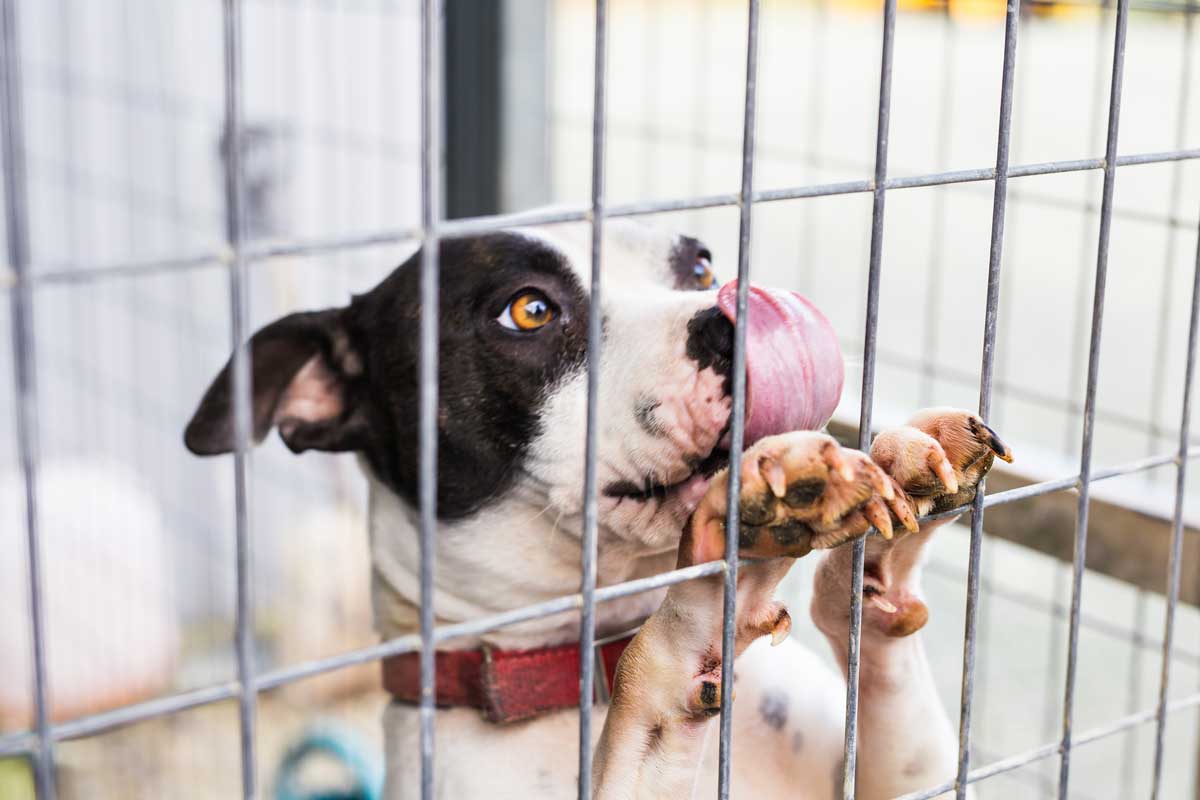
Holiday boarding fills up earlier than most owners expect, and the vaccines that get your pet in the door take a while to do anything. So if you are traveling for Thanksgiving or Christmas, call now. Not in November. Call now. On the same call you settle two things: which dates are still open, and which vaccines the facility wants and when your pet last had them. Kennels commonly want the Bordetella shot given within the past six months and at least a week ahead of arrival, so a dog who is due needs an appointment too, not just a room. Then ask who is on site overnight, what happens if your pet stops eating, and whether staff can give medications. For pet boarding in Spencer, IA, call Homestead Small Animal Practice at (712) 262-8990.
Key takeaways
- Book holiday boarding in September or October. Thanksgiving and Christmas dates go first.
- Vaccines need lead time. A dog who is due cannot be caught up the morning of drop-off.
- Ask who is on site overnight and what happens if your pet stops eating or gets sick.
- Pets on medication, diabetic pets, blind pets, and dogs with bad hips can usually board. Ask rather than assume.
- A cat who will not eat for several days is a medical problem, not a mood.
Why does holiday boarding fill up so early?
Because everyone leaves on the same four or five days. A kennel has a fixed number of runs. Thanksgiving week, and the stretch between Christmas and New Year’s, are the only weeks when nearly every family in Clay County is traveling or hosting. So the runs get spoken for early, and the leftovers in November are what nobody wanted.
Here is what actually catches owners, though. It is not the calendar. It is the paperwork. Someone calls in mid-November, finds an opening, then learns the dog’s Bordetella lapsed back in June and there is no appointment before they leave. Now that family is hunting for a sitter three days out. I see that call every year. Making it in September prevents all of it, and it is the part people forget because it feels like the easy part until it is not.
What vaccines does my pet need before boarding?
Every facility sets its own list, so confirm with yours. But the shape is consistent, and the timing is what trips people up, so pay attention there.
Rabies is not a house rule. Under Iowa Code 351.33, any dog six months or older has to be vaccinated for it. That is the law, not a suggestion a kennel made up.
Distemper and parvovirus are core vaccines under the AAHA guidelines, which means every dog gets them regardless of lifestyle. A couch dog gets them. A barn dog gets them. Same list.
Bordetella is the one that catches people, because it is the one that expires. It is non-core, recommended based on what your dog actually does, and boarding is the exact lifestyle it exists for. AAHA notes clinical immunity may run as short as about six months and that boosting before boarding can be worthwhile for higher-risk dogs. Kennels commonly want it within the past six months and a week ahead, because the vaccine needs time to work. A shot on the morning of drop-off does nothing.
So pull your records now, not in November. If anything expires before your travel dates, book while appointments still exist. Our guide to pet vaccinations covers what each one does. Cats need to be current too, on a shorter list, so ask about them specifically. I would rather you overbook than scramble.
Boarding, a pet sitter, or the neighbor down the road?
All three are legitimate. They fail in different ways, and that is the useful thing to know before you decide.
A sitter keeps your pet home on her own routine, which suits an anxious dog or a cat who truly does not travel. The catch is coverage. Most sitters come twice a day. So a pet who gets into something at nine in the morning is not found until evening. That gap is the whole argument.
The neighbor is free and knows your dog. The neighbor is also not thinking about your dog at two in the afternoon on Thanksgiving, and may not recognize a bloated belly or a dog who has not urinated all day. I am not being uncharitable about neighbors. Watching for medical problems is a skill. It is unfair to assume someone has it because they live nearby. If the answer is the neighbor, make the neighbor a phone call away at all times.
Boarding trades the familiar place for eyes on your pet all day. For most healthy dogs, that is a good trade. I take the call from someone who would rather their dog stay home, and I get the one who would rather someone actually watch. Both are right. Just know which one you are buying, and know it before you need it.
What should I ask before I book?
A phone call and a ten-minute walk through tell you most of it. Any facility worth using will show you where your pet sleeps, during business hours, without an appointment. If the answer is no, that is the whole answer, and you do not need to ask the rest.
- Who is here overnight, and on the holiday itself? Around-the-clock staffing and twice-daily checks are both defensible. You just need to know which one you are buying.
- What happens if my pet gets sick? Ask who makes the call, and how fast a veterinarian actually sees the animal. Not how fast someone notices, but how fast a vet sees it.
- Can you give medications, and is there a charge? Ask about pills, insulin injections, and eye drops separately. They are not the same job, and the answer is not the same for all three.
- What are the pickup days and hours? This is the question that wrecks travel plans. Plenty of kennels close Sunday and holidays. The dog you meant to collect Sunday comes home Monday. Ask the exact hours before you plan the trip around them.
- Do dogs mix? Group play suits some dogs and not others. Either answer is fine. Just know it before drop-off, because a mismatch is a bad first night.
What if my pet needs more than a kennel and a bowl?
Owners of diabetic pets, blind pets, and old dogs with bad hips often assume boarding is closed to them and quietly skip trips for years. It usually is not. It has to be the right facility, and you have to say all of it up front instead of hoping it goes unnoticed.
Send her own food with a little extra in case you are delayed. Medications in their original labeled containers. The schedule written down, even after you have said it out loud to someone who will never see the note. And mention what feels too small to mention: she cannot do stairs, he panics at thunder, she will not eat unless the food is wet down. That is the stuff that makes a stay uneventful, and it is the stuff people skip because it sounds trivial.
Cats are their own conversation. A cat in a strange place often hides and stops eating. And while a dog skipping a meal is usually nothing, a cat is a different animal. The Merck Veterinary Manual describes hepatic lipidosis, the most common and potentially fatal liver disease in cats, as a condition set in motion by a stretch of not eating, with overweight cats at highest risk. Several days is enough. Ask how the facility tracks whether a cat is genuinely eating, and give her somewhere to get up off the floor and out of sight.
Boarding at Homestead
The fair objection to boarding at a veterinary clinic is that sick patients come first and boarders get whatever attention is left over. Ask us that straight when you come in. Here is what it looks like. Climate-controlled kennels supervised by a veterinarian. Each pet in their own run with a blanket, water, and the food you send. Dogs out several times a day to the grassy yard behind the building. A two-level condo for cats who would rather be up high watching the room than on the floor. We take pets on medications and pets managing diabetes, blindness, or joint and back problems, largely because the people giving those medications do it all day anyway. We do Sunday and holiday dismissals, which matters more in December than any other month. And when a boarder does get sick, the exam room is down the hall and there are three veterinarians on staff. Come see the boarding and bathing setup during business hours and judge it yourself. I would rather you saw it than take my word for it.
When to call the vet
Boarding is safe. Dogs still come home from any group setting having shared air with other dogs, so you should know what you are looking at.
Call (712) 262-8990 the same day for:
- A cough paired with lethargy, fever, poor appetite, or labored breathing. The AVMA notes most kennel cough is mild and clears in seven to ten days. But that combination can mean pneumonia, and that is the day to call.
- A cat who has not eaten since coming home, especially an overweight one, or a pet yellow around the gums or eyes.
- Repeated vomiting, bloody diarrhea, or straining without producing urine.
- A dog who has not urinated since pickup.
Fine to raise at the next visit:
- A dry honking cough in a bright, hungry dog.
- A few pounds lost over a long stay.
- Soft stool that firms up within a day or two.
- A pet who sleeps hard for two days. Usually just means they rested poorly away from you.
Unsure which column you are in? Our post on the signs that mean your pet cannot wait lays it out. Homestead is not a 24 hour emergency hospital. We are open Monday through Friday 7:30 to 5:30 and Saturday 7:30 to noon. Outside those hours, call (712) 262-8990 for instructions.
Frequently asked questions
How far ahead should I book holiday boarding?
For Thanksgiving and Christmas, September or October. Those two weeks are the tightest of the year, and what is left in mid-November is usually what nobody wanted. Booking early also leaves room to get vaccines current without rushing, which is the part people forget until they are three days out.
My dog has never been boarded. Will she be okay?
Most dogs do fine. The ones who struggle usually settle by the second day. If you are unsure, book a single night in October as a trial run. You learn how she handles it while it is still low stakes, and she arrives in December already knowing the place. That is my recommendation to almost everyone who asks.
My dog came home coughing. Is that normal?
It happens. It does not mean the kennel did something wrong. Kennel cough spreads wherever dogs share air, and Merck notes stress and swings in temperature and ventilation raise both the risk and the severity. A dog coughing but bright and eating usually rides it out. One who is also flat, off food, or breathing hard needs to be seen, and that is the call to make today.
Can I board a cat who hides constantly?
Yes. And the hiding is not the problem. Not eating is. A cat tucked into the upper level of a condo watching the room is coping normally. Tell whoever is boarding her that she is a hider, so they check her intake deliberately rather than reading an untouched bowl as picky.
Get it on the calendar
It comes down to one habit: make the call while the holidays still feel far away. Pull the records. Pick your dates. Book the appointment if anything is due. Ten minutes in September buys you a quiet week in November, and it is the call I wish everyone made earlier.
Call (712) 262-8990 or book online. We are at 205 11th St SW in Spencer and board pets from across Clay and Dickinson counties, Emmetsburg, Alta, Storm Lake, and Cherokee. If you would rather see the kennels first, stop in any weekday and we will walk you back.
This article is general education and is not a substitute for an examination. A veterinarian can only diagnose and treat your pet through a valid veterinarian-client-patient relationship.