
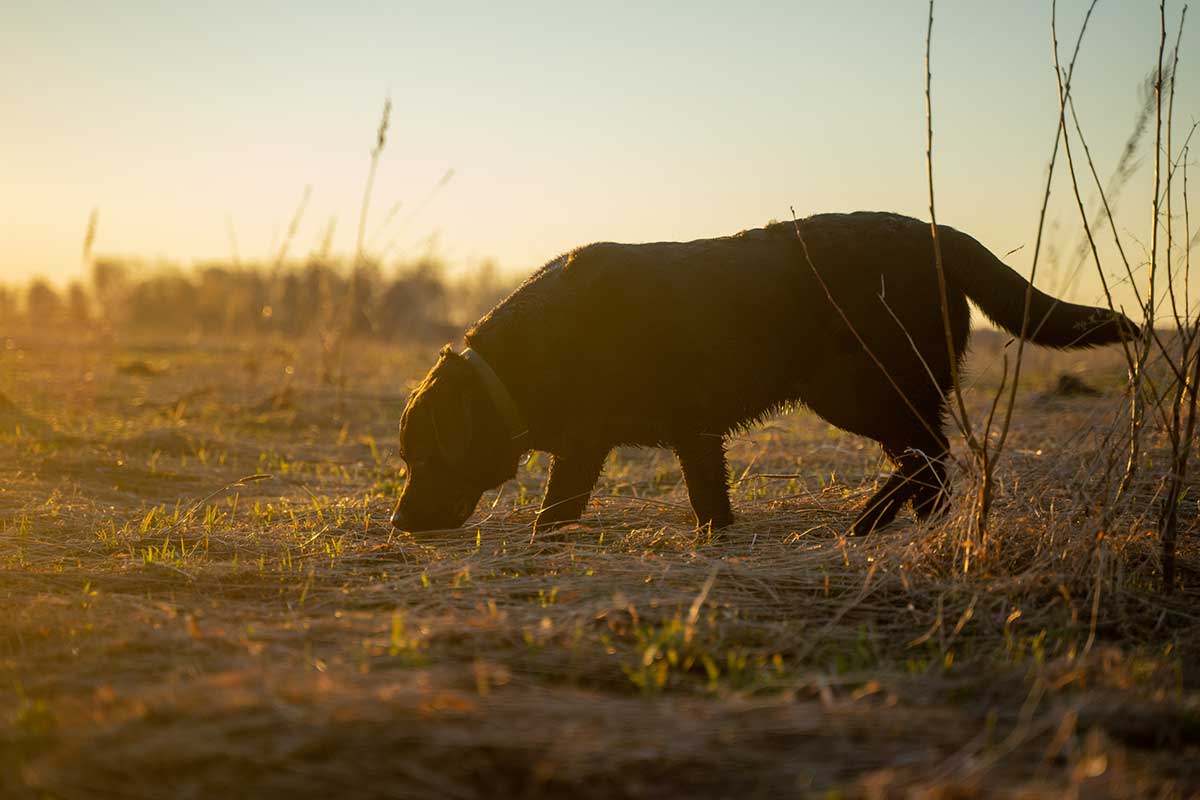
A dog who goes wobbly in a pheasant field is done for the day. Stop the hunt at the first stagger, check his temperature, and call. Overheating, low blood sugar, and exercise-induced collapse look alike out in the cover, and only an exam sorts them out. Iowa opens rooster season on October 31, with the youth weekend on October 24 and 25. If your dog hasn’t hunted since January, the days between now and opener matter more than opening morning does. Homestead Small Animal Practice answers at (712) 262-8990, and the same line gives you after-hours instructions. If a young Lab has ever collapsed, ask about the EIC test before he hunts again.
A good bird dog doesn’t pace himself. He keeps going long after his body has told him to stop, and that same drive is what gets him hurt on opening weekend.
Key takeaways
- A dog who goes wobbly in the field is done for the day. Stop at the first stagger.
- Heat, low blood sugar, and exercise-induced collapse look alike out there. An exam sorts them out.
- If he’s squinting after a hunt, get that eye seen the same day.
- A dog who’s never had the lepto vaccine needs two doses four weeks apart, so start now.
- Even a week or two of harder outings before opener helps his feet.
Why is opener hard on a pheasant hunting dog?
A good bird dog doesn’t pace himself. He’ll keep going long after his body has started asking him to stop, and that’s the same drive that gets him hurt on opening weekend.
Picture opening Saturday for most dogs: six hours of CRP and cattails, maybe sixty-five degrees with a south wind, on pads that haven’t seen rough cover since January. He’ll look fine at the truck, but his feet and his heat tolerance are still somewhere back in July.
I live on a farm north of Aurelia, so tired dogs at the end of a fall day are just part of life, and I don’t think twice about them. A dog whose back legs give out halfway across a field is another matter, and most of this post is about him.
My dog went wobbly in the field. What’s happening?
Three different problems give you the same picture: a dog who suddenly runs like he’s drunk, drags his back end, or lies down and won’t get up. You can’t tell them apart standing in a field, and the first steps are the same anyway.
Overheating
Dogs overheat in October too, because hard running makes more heat than a mild afternoon can carry off. Cornell’s Riney Canine Health Center puts heatstroke at 105°F or higher, with heavy panting, drooling, confusion, and collapse among the signs. Normal runs roughly 100.5 to 102.5°F. Wet him down with cool water and park him in front of the truck’s air conditioning on the way in.
Low blood sugar
Veterinarians call it hunting dog hypoglycemia. A 2016 Vet Times review describes it in lean working dogs after long, hard exercise, once the sugar stored in the liver is used up. A 2009 paper on field medicine for bird dogs lists collapse and seizures among the results, with poor conditioning as a risk. In my experience the dogs who get into trouble are the ones who aren’t in shape yet, and it tends to catch up with them later in a long day or a couple of days into a trip.
Exercise-induced collapse in young Labs
Most hunters I talk to have never heard of this one. The University of Minnesota’s Canine Genetics Lab, whose researchers published the EIC gene in 2008, reports that 30 to 40 percent of Labradors carry one copy of the mutation and 3 to 13 percent carry two, which makes them susceptible. Signs usually start between five months and three years old, often in the fittest, most wound-up dog in the kennel, and five to twenty minutes of intense, excited work can set it off. Pheasant hunting is on their list of common triggers.
The back legs go first. A lot of these dogs stay alert and keep trying to hunt while dragging their hind end, then look normal again within 5 to 25 minutes, so don’t let the quick recovery reassure you. The researchers report that a few affected dogs have died during exercise or while resting right after an episode, and their advice is to stop at the first hint of wobbliness.
So what do I do in the moment?
- Stop the hunt. Leash him, carry him if you have to, and end his day.
- Get the vest off so nothing restricts his breathing.
- If he’s hot, wet him down and get him to the air conditioning.
- Don’t put food, syrup, or water in his mouth unless he’s fully alert. He can inhale it.
- Call (712) 262-8990. If we’re closed, the same number gives you instructions for reaching care.
If he bounces back in fifteen minutes and wants to go again, call anyway. A dog who collapses once needs a workup before he hunts again.
What injuries come home from the field?
Cuts
Barbed wire and cut cornstalks open skin where nobody looks, like the armpits, the inner thighs, and the chest under the vest. Run your hands over him after every hunt; anything that gapes, goes deeper than the skin, or bleeds through five minutes of steady pressure should be seen that day, because “we’ll see how it looks Monday” usually means a bigger repair.
Eyes
A dog running flat out through grass and stubble takes hits to the eye all season. A scratch on the cornea, the clear front of the eye, hurts, and he’ll show you by squinting, tearing, or keeping it shut. Please don’t wait to see if it opens tomorrow, because scratches can deepen into ulcers.
Stray shot
It happens to careful hunters. Bring him in even if you can only find a pellet or two; X-rays show us where they went.
Feet and awns
Pads wear raw on a dog who hasn’t hunted since winter, and awns ride home on everything (our harvest hazards post explains why they’re trouble). During the season, a sudden limp with licking at one foot, or head shaking that hasn’t quit by supper, usually means one is in there.
How do I get my dog ready before opener?
There are three things worth doing this week. Check his lepto vaccine first. Leptospirosis spreads through wildlife and livestock urine and can damage the kidneys and liver, and the AVMA says experts recommend the vaccine for all dogs, with the Midwest a hotspot. A dog who’s never had it needs two doses four weeks apart, then a yearly booster. He won’t be fully covered by the 31st if you start now, but the season runs to January 10, so start anyway.
While you’re on the phone, make sure his microchip is registered to your current number. A chip that still points to the breeder won’t get him home. And if you’ve got a young Lab who has ever gone wobbly, ask us about the EIC test, a blood sample or cheek swab sent to a genetics lab such as Minnesota’s.
Between now and opener, take him out two or three times a week in real cover, a little longer and rougher each time. Mowed grass won’t toughen his pads.
Before the first trip, put this in the truck:
- Gauze and self-stick wrap
- Plenty of drinking water, plus sterile saline for flushing an eye
- A rectal thermometer, so you can tell us a number instead of “he felt hot”
- An old blanket to carry a dog who can’t walk
Leave your own medicine cabinet at home, and call before giving him anything.
What can Homestead handle?
A pre-season exam catches the small stuff before it costs him a weekend. Most field injuries get handled here, with digital X-rays backed by SignalPET consults, wound repair, monitored surgery, and three veterinarians on staff. I’d rather see a small foot problem before opener than a big one on opening day. You can see our surgery, radiology, and wellness services and the team.
Homestead isn’t a 24-hour emergency hospital, so plan around our hours. We’re open Monday through Friday from 7:30 to 5:30, and Saturday mornings from 7:30 to noon. On opener, Saturday morning is covered. Saturday afternoon isn’t.
When to call the vet
Call (712) 262-8990 now for:
- Wobbling, dragging the back legs, confusion, or collapse during or after a hunt, even if he recovers
- A seizure
- Heavy panting that won’t settle with rest and shade, or a temperature over 104°F that isn’t coming down with cooling
- A cut that gapes, goes deep, or bleeds through five minutes of pressure
- A squinting, cloudy, or held-shut eye
- Any dog hit by shot
- Vomiting, lethargy, yellow gums, or heavy drinking and urinating in the weeks after hunting wet ground
Fine to bring up at the next visit:
- Worn or tender pads on a dog who’s bright and eating
- Stiffness the morning after a big day that’s gone by noon
- A small scrape that’s closed and stays clean
Not sure which list you’re on? Our post on the signs that mean your pet can’t wait walks through it. After hours, call the same number, (712) 262-8990, and follow the instructions for reaching care.
Frequently asked questions
Should I give my dog sugar if he gets shaky in the field?
Not as a reflex. Shaky can just as easily be heat or EIC, which sugar won’t fix, and a dog who isn’t fully alert can inhale whatever you put in his mouth. If he’s had low-sugar spells before, we’ll work out a field plan with you before the season.
My Lab collapsed and was fine fifteen minutes later. Does he still need a vet?
Yes, before he hunts again. A quick recovery fits EIC, but the Minnesota researchers want treatable causes ruled out first, including heart rhythm problems, anemia, low blood sugar, and orthopedic disease. If those come back clear, the EIC test answers the rest.
My dog had heatstroke last year. Can he still hunt?
Often, with changes. Cornell notes survivors are more likely to overheat again, so plan on shorter runs and more water breaks. Shooting hours start at 8 a.m., and that cool first stretch of the morning is his best window.
To get him looked over before opener, book a pre-season exam online, call (712) 262-8990, or get in touch. We’re at 205 11th St SW in Spencer and see hunting dogs from across Clay and Dickinson counties, Emmetsburg, Alta, Storm Lake, and Cherokee. Good luck on the 31st.
This article is for general education and is not a substitute for an examination. A veterinarian can only diagnose and treat your pet through a valid veterinarian-client-patient relationship.