A dog who goes wobbly in a pheasant field is done for the day. Stop the hunt at the first stagger, check his temperature, and call. Overheating, low blood sugar, and exercise-induced collapse look alike out in the cover, and only an exam sorts them out. Iowa opens rooster season on October 31, with the youth weekend on October 24 and 25. If your dog hasn’t hunted since January, the days between now and opener matter more than opening morning does. Homestead Small Animal Practice answers at (712) 262-8990, and the same line gives you after-hours instructions. If a young Lab has ever collapsed, ask about the EIC test before he hunts again.
A good bird dog doesn’t pace himself. He keeps going long after his body has told him to stop, and that same drive is what gets him hurt on opening weekend.
Key takeaways
A dog who goes wobbly in the field is done for the day. Stop at the first stagger.
Heat, low blood sugar, and exercise-induced collapse look alike out there. An exam sorts them out.
If he’s squinting after a hunt, get that eye seen the same day.
A dog who’s never had the lepto vaccine needs two doses four weeks apart, so start now.
Even a week or two of harder outings before opener helps his feet.
Why is opener hard on a pheasant hunting dog?
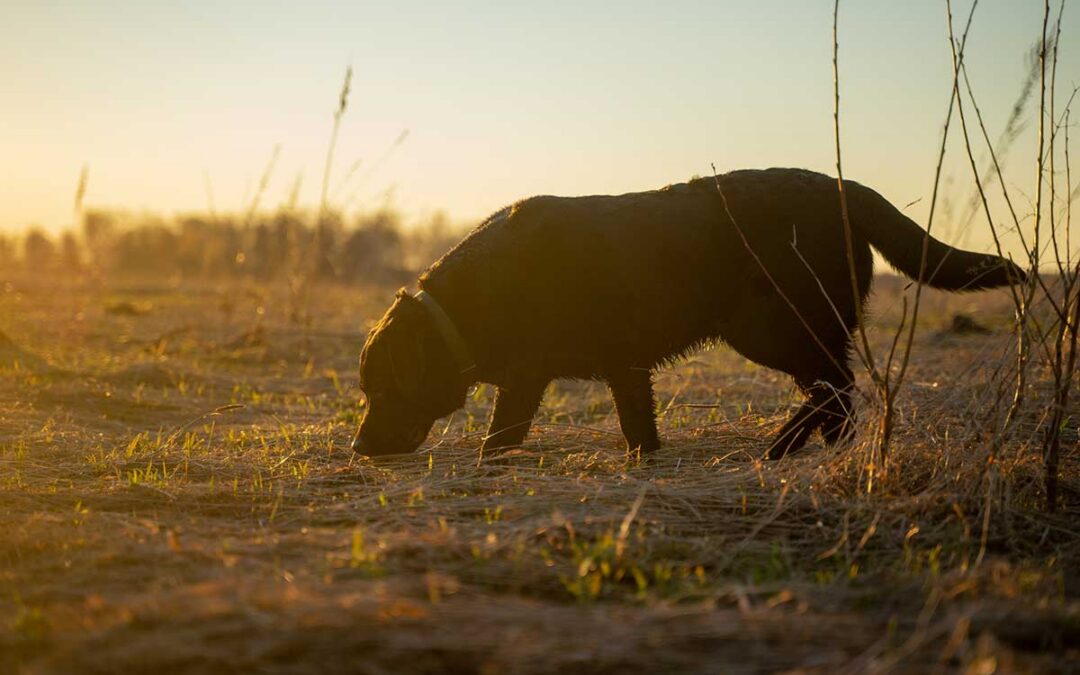
A good bird dog doesn’t pace himself. He’ll keep going long after his body has started asking him to stop, and that’s the same drive that gets him hurt on opening weekend.
Picture opening Saturday for most dogs: six hours of CRP and cattails, maybe sixty-five degrees with a south wind, on pads that haven’t seen rough cover since January. He’ll look fine at the truck, but his feet and his heat tolerance are still somewhere back in July.
I live on a farm north of Aurelia, so tired dogs at the end of a fall day are just part of life, and I don’t think twice about them. A dog whose back legs give out halfway across a field is another matter, and most of this post is about him.
My dog went wobbly in the field. What’s happening?
Three different problems give you the same picture: a dog who suddenly runs like he’s drunk, drags his back end, or lies down and won’t get up. You can’t tell them apart standing in a field, and the first steps are the same anyway.
Overheating
Dogs overheat in October too, because hard running makes more heat than a mild afternoon can carry off. Cornell’s Riney Canine Health Center puts heatstroke at 105°F or higher, with heavy panting, drooling, confusion, and collapse among the signs. Normal runs roughly 100.5 to 102.5°F. Wet him down with cool water and park him in front of the truck’s air conditioning on the way in.
Low blood sugar
Veterinarians call it hunting dog hypoglycemia. A 2016 Vet Times review describes it in lean working dogs after long, hard exercise, once the sugar stored in the liver is used up. A 2009 paper on field medicine for bird dogs lists collapse and seizures among the results, with poor conditioning as a risk. In my experience the dogs who get into trouble are the ones who aren’t in shape yet, and it tends to catch up with them later in a long day or a couple of days into a trip.
Exercise-induced collapse in young Labs
Most hunters I talk to have never heard of this one. The University of Minnesota’s Canine Genetics Lab, whose researchers published the EIC gene in 2008, reports that 30 to 40 percent of Labradors carry one copy of the mutation and 3 to 13 percent carry two, which makes them susceptible. Signs usually start between five months and three years old, often in the fittest, most wound-up dog in the kennel, and five to twenty minutes of intense, excited work can set it off. Pheasant hunting is on their list of common triggers.
The back legs go first. A lot of these dogs stay alert and keep trying to hunt while dragging their hind end, then look normal again within 5 to 25 minutes, so don’t let the quick recovery reassure you. The researchers report that a few affected dogs have died during exercise or while resting right after an episode, and their advice is to stop at the first hint of wobbliness.
So what do I do in the moment?
Stop the hunt. Leash him, carry him if you have to, and end his day.
Get the vest off so nothing restricts his breathing.
If he’s hot, wet him down and get him to the air conditioning.
Don’t put food, syrup, or water in his mouth unless he’s fully alert. He can inhale it.
Call (712) 262-8990. If we’re closed, the same number gives you instructions for reaching care.
If he bounces back in fifteen minutes and wants to go again, call anyway. A dog who collapses once needs a workup before he hunts again.
What injuries come home from the field?
Cuts
Barbed wire and cut cornstalks open skin where nobody looks, like the armpits, the inner thighs, and the chest under the vest. Run your hands over him after every hunt; anything that gapes, goes deeper than the skin, or bleeds through five minutes of steady pressure should be seen that day, because “we’ll see how it looks Monday” usually means a bigger repair.
Eyes
A dog running flat out through grass and stubble takes hits to the eye all season. A scratch on the cornea, the clear front of the eye, hurts, and he’ll show you by squinting, tearing, or keeping it shut. Please don’t wait to see if it opens tomorrow, because scratches can deepen into ulcers.
Stray shot
It happens to careful hunters. Bring him in even if you can only find a pellet or two; X-rays show us where they went.
Feet and awns
Pads wear raw on a dog who hasn’t hunted since winter, and awns ride home on everything (our harvest hazards post explains why they’re trouble). During the season, a sudden limp with licking at one foot, or head shaking that hasn’t quit by supper, usually means one is in there.
How do I get my dog ready before opener?
There are three things worth doing this week. Check his lepto vaccine first. Leptospirosis spreads through wildlife and livestock urine and can damage the kidneys and liver, and the AVMA says experts recommend the vaccine for all dogs, with the Midwest a hotspot. A dog who’s never had it needs two doses four weeks apart, then a yearly booster. He won’t be fully covered by the 31st if you start now, but the season runs to January 10, so start anyway.
While you’re on the phone, make sure his microchip is registered to your current number. A chip that still points to the breeder won’t get him home. And if you’ve got a young Lab who has ever gone wobbly, ask us about the EIC test, a blood sample or cheek swab sent to a genetics lab such as Minnesota’s.
Between now and opener, take him out two or three times a week in real cover, a little longer and rougher each time. Mowed grass won’t toughen his pads.
Before the first trip, put this in the truck:
Gauze and self-stick wrap
Plenty of drinking water, plus sterile saline for flushing an eye
A rectal thermometer, so you can tell us a number instead of “he felt hot”
An old blanket to carry a dog who can’t walk
Leave your own medicine cabinet at home, and call before giving him anything.
What can Homestead handle?
A pre-season exam catches the small stuff before it costs him a weekend. Most field injuries get handled here, with digital X-rays backed by SignalPET consults, wound repair, monitored surgery, and three veterinarians on staff. I’d rather see a small foot problem before opener than a big one on opening day. You can see our surgery, radiology, and wellness services and the team.
Homestead isn’t a 24-hour emergency hospital, so plan around our hours. We’re open Monday through Friday from 7:30 to 5:30, and Saturday mornings from 7:30 to noon. On opener, Saturday morning is covered. Saturday afternoon isn’t.
When to call the vet
Call (712) 262-8990 now for:
Wobbling, dragging the back legs, confusion, or collapse during or after a hunt, even if he recovers
A seizure
Heavy panting that won’t settle with rest and shade, or a temperature over 104°F that isn’t coming down with cooling
A cut that gapes, goes deep, or bleeds through five minutes of pressure
A squinting, cloudy, or held-shut eye
Any dog hit by shot
Vomiting, lethargy, yellow gums, or heavy drinking and urinating in the weeks after hunting wet ground
Fine to bring up at the next visit:
Worn or tender pads on a dog who’s bright and eating
Stiffness the morning after a big day that’s gone by noon
A small scrape that’s closed and stays clean
Not sure which list you’re on? Our post on the signs that mean your pet can’t wait walks through it. After hours, call the same number, (712) 262-8990, and follow the instructions for reaching care.
Frequently asked questions
Should I give my dog sugar if he gets shaky in the field?
Not as a reflex. Shaky can just as easily be heat or EIC, which sugar won’t fix, and a dog who isn’t fully alert can inhale whatever you put in his mouth. If he’s had low-sugar spells before, we’ll work out a field plan with you before the season.
My Lab collapsed and was fine fifteen minutes later. Does he still need a vet?
Yes, before he hunts again. A quick recovery fits EIC, but the Minnesota researchers want treatable causes ruled out first, including heart rhythm problems, anemia, low blood sugar, and orthopedic disease. If those come back clear, the EIC test answers the rest.
My dog had heatstroke last year. Can he still hunt?
Often, with changes. Cornell notes survivors are more likely to overheat again, so plan on shorter runs and more water breaks. Shooting hours start at 8 a.m., and that cool first stretch of the morning is his best window.
To get him looked over before opener, book a pre-season exam online, call (712) 262-8990, or get in touch. We’re at 205 11th St SW in Spencer and see hunting dogs from across Clay and Dickinson counties, Emmetsburg, Alta, Storm Lake, and Cherokee. Good luck on the 31st.
This article is for general education and is not a substitute for an examination. A veterinarian can only diagnose and treat your pet through a valid veterinarian-client-patient relationship.
Holiday boarding fills up earlier than most owners expect, and the vaccines that get your pet in the door take a while to do anything. So if you are traveling for Thanksgiving or Christmas, call now. Not in November. Call now. On the same call you settle two things: which dates are still open, and which vaccines the facility wants and when your pet last had them. Kennels commonly want the Bordetella shot given within the past six months and at least a week ahead of arrival, so a dog who is due needs an appointment too, not just a room. Then ask who is on site overnight, what happens if your pet stops eating, and whether staff can give medications. For pet boarding in Spencer, IA, call Homestead Small Animal Practice at (712) 262-8990.
Key takeaways
Book holiday boarding in September or October. Thanksgiving and Christmas dates go first.
Vaccines need lead time. A dog who is due cannot be caught up the morning of drop-off.
Ask who is on site overnight and what happens if your pet stops eating or gets sick.
Pets on medication, diabetic pets, blind pets, and dogs with bad hips can usually board. Ask rather than assume.
A cat who will not eat for several days is a medical problem, not a mood.
Why does holiday boarding fill up so early?
Because everyone leaves on the same four or five days. A kennel has a fixed number of runs. Thanksgiving week, and the stretch between Christmas and New Year’s, are the only weeks when nearly every family in Clay County is traveling or hosting. So the runs get spoken for early, and the leftovers in November are what nobody wanted.
Here is what actually catches owners, though. It is not the calendar. It is the paperwork. Someone calls in mid-November, finds an opening, then learns the dog’s Bordetella lapsed back in June and there is no appointment before they leave. Now that family is hunting for a sitter three days out. I see that call every year. Making it in September prevents all of it, and it is the part people forget because it feels like the easy part until it is not.
What vaccines does my pet need before boarding?
Every facility sets its own list, so confirm with yours. But the shape is consistent, and the timing is what trips people up, so pay attention there.
Rabies is not a house rule. Under Iowa Code 351.33, any dog six months or older has to be vaccinated for it. That is the law, not a suggestion a kennel made up.
Distemper and parvovirus are core vaccines under the AAHA guidelines, which means every dog gets them regardless of lifestyle. A couch dog gets them. A barn dog gets them. Same list.
Bordetella is the one that catches people, because it is the one that expires. It is non-core, recommended based on what your dog actually does, and boarding is the exact lifestyle it exists for. AAHA notes clinical immunity may run as short as about six months and that boosting before boarding can be worthwhile for higher-risk dogs. Kennels commonly want it within the past six months and a week ahead, because the vaccine needs time to work. A shot on the morning of drop-off does nothing.
So pull your records now, not in November. If anything expires before your travel dates, book while appointments still exist. Our guide to pet vaccinations covers what each one does. Cats need to be current too, on a shorter list, so ask about them specifically. I would rather you overbook than scramble.
Boarding, a pet sitter, or the neighbor down the road?
All three are legitimate. They fail in different ways, and that is the useful thing to know before you decide.
A sitter keeps your pet home on her own routine, which suits an anxious dog or a cat who truly does not travel. The catch is coverage. Most sitters come twice a day. So a pet who gets into something at nine in the morning is not found until evening. That gap is the whole argument.
The neighbor is free and knows your dog. The neighbor is also not thinking about your dog at two in the afternoon on Thanksgiving, and may not recognize a bloated belly or a dog who has not urinated all day. I am not being uncharitable about neighbors. Watching for medical problems is a skill. It is unfair to assume someone has it because they live nearby. If the answer is the neighbor, make the neighbor a phone call away at all times.
Boarding trades the familiar place for eyes on your pet all day. For most healthy dogs, that is a good trade. I take the call from someone who would rather their dog stay home, and I get the one who would rather someone actually watch. Both are right. Just know which one you are buying, and know it before you need it.
What should I ask before I book?
A phone call and a ten-minute walk through tell you most of it. Any facility worth using will show you where your pet sleeps, during business hours, without an appointment. If the answer is no, that is the whole answer, and you do not need to ask the rest.
Who is here overnight, and on the holiday itself? Around-the-clock staffing and twice-daily checks are both defensible. You just need to know which one you are buying.
What happens if my pet gets sick? Ask who makes the call, and how fast a veterinarian actually sees the animal. Not how fast someone notices, but how fast a vet sees it.
Can you give medications, and is there a charge? Ask about pills, insulin injections, and eye drops separately. They are not the same job, and the answer is not the same for all three.
What are the pickup days and hours? This is the question that wrecks travel plans. Plenty of kennels close Sunday and holidays. The dog you meant to collect Sunday comes home Monday. Ask the exact hours before you plan the trip around them.
Do dogs mix? Group play suits some dogs and not others. Either answer is fine. Just know it before drop-off, because a mismatch is a bad first night.
What if my pet needs more than a kennel and a bowl?
Owners of diabetic pets, blind pets, and old dogs with bad hips often assume boarding is closed to them and quietly skip trips for years. It usually is not. It has to be the right facility, and you have to say all of it up front instead of hoping it goes unnoticed.
Send her own food with a little extra in case you are delayed. Medications in their original labeled containers. The schedule written down, even after you have said it out loud to someone who will never see the note. And mention what feels too small to mention: she cannot do stairs, he panics at thunder, she will not eat unless the food is wet down. That is the stuff that makes a stay uneventful, and it is the stuff people skip because it sounds trivial.
Cats are their own conversation. A cat in a strange place often hides and stops eating. And while a dog skipping a meal is usually nothing, a cat is a different animal. The Merck Veterinary Manual describes hepatic lipidosis, the most common and potentially fatal liver disease in cats, as a condition set in motion by a stretch of not eating, with overweight cats at highest risk. Several days is enough. Ask how the facility tracks whether a cat is genuinely eating, and give her somewhere to get up off the floor and out of sight.
Boarding at Homestead
The fair objection to boarding at a veterinary clinic is that sick patients come first and boarders get whatever attention is left over. Ask us that straight when you come in. Here is what it looks like. Climate-controlled kennels supervised by a veterinarian. Each pet in their own run with a blanket, water, and the food you send. Dogs out several times a day to the grassy yard behind the building. A two-level condo for cats who would rather be up high watching the room than on the floor. We take pets on medications and pets managing diabetes, blindness, or joint and back problems, largely because the people giving those medications do it all day anyway. We do Sunday and holiday dismissals, which matters more in December than any other month. And when a boarder does get sick, the exam room is down the hall and there are three veterinarians on staff. Come see the boarding and bathing setup during business hours and judge it yourself. I would rather you saw it than take my word for it.
When to call the vet
Boarding is safe. Dogs still come home from any group setting having shared air with other dogs, so you should know what you are looking at.
Call (712) 262-8990 the same day for:
A cough paired with lethargy, fever, poor appetite, or labored breathing. The AVMA notes most kennel cough is mild and clears in seven to ten days. But that combination can mean pneumonia, and that is the day to call.
A cat who has not eaten since coming home, especially an overweight one, or a pet yellow around the gums or eyes.
Repeated vomiting, bloody diarrhea, or straining without producing urine.
A dog who has not urinated since pickup.
Fine to raise at the next visit:
A dry honking cough in a bright, hungry dog.
A few pounds lost over a long stay.
Soft stool that firms up within a day or two.
A pet who sleeps hard for two days. Usually just means they rested poorly away from you.
Unsure which column you are in? Our post on the signs that mean your pet cannot wait lays it out. Homestead is not a 24 hour emergency hospital. We are open Monday through Friday 7:30 to 5:30 and Saturday 7:30 to noon. Outside those hours, call (712) 262-8990 for instructions.
Frequently asked questions
How far ahead should I book holiday boarding?
For Thanksgiving and Christmas, September or October. Those two weeks are the tightest of the year, and what is left in mid-November is usually what nobody wanted. Booking early also leaves room to get vaccines current without rushing, which is the part people forget until they are three days out.
My dog has never been boarded. Will she be okay?
Most dogs do fine. The ones who struggle usually settle by the second day. If you are unsure, book a single night in October as a trial run. You learn how she handles it while it is still low stakes, and she arrives in December already knowing the place. That is my recommendation to almost everyone who asks.
Yes. And the hiding is not the problem. Not eating is. A cat tucked into the upper level of a condo watching the room is coping normally. Tell whoever is boarding her that she is a hider, so they check her intake deliberately rather than reading an untouched bowl as picky.
Get it on the calendar
It comes down to one habit: make the call while the holidays still feel far away. Pull the records. Pick your dates. Book the appointment if anything is due. Ten minutes in September buys you a quiet week in November, and it is the call I wish everyone made earlier.
Call (712) 262-8990 or book online. We are at 205 11th St SW in Spencer and board pets from across Clay and Dickinson counties, Emmetsburg, Alta, Storm Lake, and Cherokee. If you would rather see the kennels first, stop in any weekday and we will walk you back.
This article is general education and is not a substitute for an examination. A veterinarian can only diagnose and treat your pet through a valid veterinarian-client-patient relationship.
Harvest brings a specific set of hazards to farm dogs and cats. Rodent bait goes out as mice move toward buildings, antifreeze gets drained and topped off in the shop, grain and silage spoil in the pile, machinery runs late in low light, and gravel roads carry more traffic than any other time of year. The two hazards that kill fastest are rodenticide and antifreeze, and both are treatable if you call early.
Do not wait for symptoms with either one. If you think your dog or cat got into rodent bait, ate a poisoned mouse, or licked antifreeze, call Homestead Small Animal Practice at (712) 262-8990. That same number after hours gets you instructions on what to do next. Bring the product container or a photo of its label. With antifreeze, the window where treatment still works well is measured in hours.
Key takeaways
Rodenticide is not one poison. Bring the container or a photo of the label, because treatment depends entirely on the active ingredient.
A cat or dog can be poisoned by eating a poisoned mouse, not just by eating the bait.
Antifreeze poisoning peaks in fall and winter, and the antidote works best within hours.
Moldy grain, spoiled silage, and carcasses in the ditch cause tremors and seizures that come on fast.
Calling before symptoms start gives your pet better odds and usually costs less than waiting.
Why does harvest change the risk?
From mid-September through November the farm turns into a different place, and the dog is the last one to know. Combines run fields he has always had to himself. Mice head for the buildings, so bait goes out. Radiators get flushed, grain spills and sits and gets warm.
Underneath all of it runs one pattern worth carrying away: almost nothing dangerous about harvest looks dangerous at first. Anticoagulant bait takes days to show itself. Antifreeze poisoning has a stretch in the middle where the animal seems to rally. A dog clipped by a grain cart gets up, shakes off, and trots back to the house. Owners who wait are not being careless, they are responding reasonably to an animal who looks fine, and eleven months of the year that instinct serves them well. October is the month it does not.
Rodent bait: the fall poison that hides in plain sight
Rodenticide is not one product, and that single fact drives everything else. According to the Merck Veterinary Manual’s overview of rodenticide poisoning, what sits on the shelf today includes anticoagulants, bromethalin, cholecalciferol, and phosphides. Anticoagulants stop blood from clotting and have a good antidote. Bromethalin swells the brain and has none. Cholecalciferol drives calcium up and takes out the kidneys. Same shed, same shelf, three very different emergencies.
Merck is also explicit that color, shape, and size will not tell you which one you are looking at, since those run alike across brands. So when we ask for the container, it is not fussiness about paperwork. Without the active ingredient we cover every possibility at once: more bloodwork, more days of treatment, a bigger bill, all for a dog who may well have eaten the one product with a clean antidote sitting in our cabinet.
Barn cat owners get caught a different way. Merck lists eating poisoned prey as a real route of poisoning, so a cat who never goes near a bait station can be poisoned by the mouse that did.
Anticoagulants hide longest. Every sign traces back to bleeding somewhere, and they surface days after the bait went down: tired, weak, off feed, bleeding from the nose, pale gums, breathing hard, sometimes limping on a leg bleeding into the joint. By then he has been poisoned most of a week. I would far rather see a bouncy dog on Monday than a pale one on Thursday.
Why antifreeze is the one we hate to see
Ethylene glycol tastes sweet and animals will drink it on purpose. The Merck Veterinary Manual notes that in cold climates these poisonings run seasonal, clustered in fall, winter, and early spring, exactly when radiators get flushed. Lethal amount: a few teaspoons for a dog, one to two for a cat. That is a puddle under a truck, or the wet spot on the shop floor nobody bothered with.
All of it comes down to the clock. Pet Poison Helpline puts the antidote window at roughly eight to twelve hours for dogs and about three hours for cats, and past that the outlook falls off a cliff. Three hours is nothing when the cat is out and nobody saw it happen.
Early on the animal looks drunk: wobbling, disoriented, throwing up, drinking and urinating more than usual. Then comes the part that fools people. They perk up. An owner sees a cat who was staggering at breakfast acting normal by supper and reasonably concludes it passed, when what has happened is that the first phase ended and the kidneys have quietly started to fail. If your pet is acting drunk and there is a vehicle or a shop floor in the picture, call while they still look bad. Waiting until they look bad again is waiting too long.
Can moldy grain or spoiled silage really hurt a dog?
Yes, and it catches people who have farmed their whole lives. Molds growing on spoiled feed put out compounds called tremorgenic mycotoxins. Merck’s entry on tremorgenic neuromycotoxicosis names silage and food waste among the sources and lists what they do to dogs: vomiting, tremors, wobbliness, a racing heart, seizures, usually within hours of eating.
So the spoiled crust on a silage pile counts, along with grain that sat and got warm, the compost pile, and the corner of the shed where last year’s mess never got swept.
The ditch belongs here too. A dog working a fenceline in October turns up carcasses, and a dead animal is two problems at once: rotten meat, plus whatever killed it, which this time of year is often bait. When somebody tells me their dog was gone twenty minutes and came back trembling, moldy feed and something dead are the first two things I ask about.
What comes home from the field
Trauma cases pile up during harvest for reasons nobody needs explained: blind spots, machinery loud enough that a dog never hears the second vehicle, work running past dark, and gravel roads carrying semis that are not out there in July. The dog who gets clipped and walks away is the one that worries me most. Internal bleeding, a bruised lung, a torn diaphragm: all three can look like a shaken-up animal who is basically fine, for hours. Same trap as the one in our post on the signs that mean your pet cannot wait, and it is the call owners talk themselves out of most.
Two smaller things ride home with the dog. Corn cobs do not soften and do not break down, so one that lodges in the small intestine stays put, and a dog retching over and over without bringing anything up should be seen that day rather than watched overnight. Grass awns are the other. Those barbed seed heads come off dry stubble and work into a paw, an ear canal, or a nostril, and the way the barbs lie, they travel inward instead of backing out. A sudden limp with licking at one foot. Violent sneezing out of nowhere. Head shaking that will not quit. After a field day, any of those usually means something is in there.
What should I bring when I come in?
For a suspected poisoning, three things change how fast we can work.
The product container, or a photo of the label showing the active ingredient and EPA registration number. Most valuable thing you can hand us.
Your best guess at how much and how long ago. Half a block, sometime after lunch, is genuinely useful.
Anything your pet brought up, bagged. Vomit with bait fragments in it answers questions no test answers as fast.
Call on your way in rather than after you arrive, so we can have what your pet needs ready.
How do I harvest-proof my place?
Not by kenneling him for two months. By making a few decisions before harvest instead of during it.
Keep bait containers and labels in one drawer in the shop, so nobody is hunting at nine at night.
Use tamper-resistant stations where a dog cannot reach, remembering they do not stop a cat catching a poisoned mouse.
Clean coolant spills immediately, cover the spot with absorbent material, and store coolant closed and off the floor.
Sweep spilled grain, and keep dogs off the crust of a silage pile and out of the compost.
Put a reflective collar or a light on any dog outside near equipment at dusk.
Run your hands over the dog after a field day. Feet, between the toes, ears, armpits. Awns are far easier on day one than day five.
What we can handle here
Most of this gets worked up and treated right here, which matters when the difference between outcomes is measured in hours. Digital radiology on site with SignalPET consult support, ultrasound for the cases an X-ray cannot settle, our own bloodwork, the pharmacy stock these cases need, and three veterinarians on staff. Our radiology, ultrasound, and surgical services page has the detail, and you can meet the doctors and technicians who would be working on your animal. If I could get one thing across before harvest, though, it would not be about equipment: get established with a veterinarian while nothing is wrong. An animal we have already seen, with a weight and a history on file, is one we can move on immediately instead of starting from scratch at the worst possible moment.
Homestead is not a 24-hour emergency hospital, and I am not going to imply otherwise. Hours are Monday through Friday 7:30 to 5:30 and Saturday 7:30 to noon. Outside those hours, call (712) 262-8990 and you will get instructions on what to do next.
When to call the vet
Call (712) 262-8990 now, before symptoms start:
Your pet ate rodent bait, or ate a rodent that may have been poisoned
Any contact with antifreeze or coolant, including walking through it and grooming
Tremors, twitching, stumbling, or a seizure
Acting drunk or disoriented
Bleeding from the nose or gums, blood in urine or stool, bruising, or pale gums
Sudden weakness, collapse, or trouble breathing
Repeated retching that produces nothing, especially with a tense belly
Any animal struck by a vehicle or machinery, including one that walks away
Worth an appointment soon, but not tonight:
A new limp with licking at one foot after time in stubble or tall grass
Persistent head shaking, ear pawing, or violent sneezing following a field day
Off feed for more than a day, or drinking noticeably more than usual
If you cannot reach us and need a toxicologist right away, ASPCA Animal Poison Control is at (888) 426-4435 and Pet Poison Helpline at (855) 764-7661. Both run around the clock and charge a consultation fee.
Frequently asked questions
Should I make my dog vomit at home?
Call first, always. With some substances bringing it back up helps, with others it does real damage, and in an animal already tremoring there is a real risk of it going down the windpipe. The home remedies people find online can injure the stomach on their own.
Is pet-safe antifreeze actually safe?
Safer, which is not the same thing. Products built on propylene glycol instead of ethylene glycol are less toxic and do not carry that sweet taste, so animals are less drawn to them. Merck still describes a similar toxic syndrome, just with a better outlook. Clean up a spill of either one and call.
My barn cats hunt constantly. Should I stop using bait?
That is a real tradeoff, and it deserves a conversation rather than a blanket rule from a blog post. Poisoned rodents are a documented route of poisoning in cats, so if yours hunt, bait does put them at risk. Whether it is worth carrying depends on your buildings and your rodent pressure, and traps, exclusion work, and product choice all change the math.
My dog swallowed a corn cob. Will it pass on its own?
Sometimes, which is what makes it dangerous to assume. Corn cobs are among the more common obstructions we see, and one that sits a day becomes a considerably bigger surgery than one caught early. Retching without producing anything, refusing food, or a painful belly all mean call us.
What is this going to cost?
It depends on what your pet got into and how sick they are, and an exam is what turns that into a real number instead of a guess. What I can tell you honestly is that calling early is almost always the cheaper road, because a poisoning caught before symptoms start takes far less treatment than one caught after. Homestead offers payment plans through Cherry, with 0% APR options available for eligible clients. Ask at the front desk or see our Payment Plans page.
Before harvest gets busy
None of this is meant to make you nervous about a season you have run your whole life. It is one adjustment, for about ten weeks: the animal who looks fine is not automatically fine. Put our number in your phone, keep the bait labels in one drawer, and run your hands over the dog at the end of a field day.
If something happens, call (712) 262-8990 or book an appointment online. We are at 205 11th St SW in Spencer and see pets from across Clay and Dickinson counties, Emmetsburg, Alta, Storm Lake, and Cherokee. And if you cannot tell whether what you are looking at is urgent, that uncertainty is reason enough on its own. Nobody here has ever been annoyed by a call that turned out to be nothing.
This article is general education and is not a substitute for an examination. A veterinarian can only diagnose and treat your pet through a valid veterinarian-client-patient relationship.
Call a veterinarian immediately if your pet is struggling to breathe, bleeding heavily, unable to stand, having a seizure, straining to urinate with nothing coming out, or has eaten something toxic. These are not wait-and-see symptoms. During business hours, call Homestead Small Animal Practice in Spencer at (712) 262-8990 and we will tell you what to do next. After hours, call the same number and follow the instructions for reaching care.
And if you are not sure whether you need an emergency vet, call anyway. A two-minute phone call costs you nothing, and in most true emergencies the pets that do best are the ones whose owners called early.
Key Takeaways
Trouble breathing, heavy bleeding, collapse, seizures, urinary straining, and toxin ingestion all need a veterinarian now, not in the morning.
Pets hide pain and illness, so “he seems fine” is exactly where serious problems hide.
If your pet ate something toxic, call before you treat anything at home, and never make a pet vomit without being told to.
Rabbits, birds, and other exotic pets become emergencies faster than dogs and cats do.
Save (712) 262-8990 in your phone now. After hours, the same number gives you instructions for reaching care.
Do You Need an Emergency Vet, or Can It Wait Until Morning?
It is 10 p.m., your dog is retching, and the Facebook group is split between “he’s fine” and “go right now.” That is the moment this article is for.
Here is the honest starting point: animals hide illness. It is instinct, and they are good at it. By the time a cat looks sick on the couch, she has usually been sick for a while. So the question is never “does he seem okay,” because he will try to seem okay. The question is whether you are seeing one of a short list of signs that do not wait well.
You do not have to make that judgment alone. Describe what you are seeing over the phone and we will tell you whether it can wait until morning. That call is the single most useful tool you have.
What Are the 6 Signs Your Pet Needs a Vet Now?
1. Trouble breathing or choking
Labored breathing, nonstop coughing or gagging, and gums that look blue, gray, or white instead of pink all mean minutes matter. A cat breathing with her mouth open is an emergency every time; cats do not pant to cool off the way dogs do. The American Veterinary Medical Association puts breathing difficulty near the top of its list of animal emergencies that need immediate care, and so do we. Call while you are getting in the truck.
2. Heavy bleeding or trauma
Bleeding that does not stop within about five minutes of steady pressure needs a veterinarian, as does any pet hit by a vehicle, kicked by livestock, caught in machinery, or dropped from a height. In farm country the trauma cases climb every harvest, and the dangerous ones are often the dogs who “walked it off.” Internal bleeding and organ injury do not always show on the outside, and a dog can look fine for hours before crashing. After any real impact, get checked the same day.
3. Your pet ate something toxic
Rodenticide, antifreeze, human medications, xylitol gum, grapes and raisins, and lilies for cats are the ones we hear about most, but the list is long. Call us first, or reach a veterinary toxicologist any hour at ASPCA Animal Poison Control at (888) 426-4435 or the Pet Poison Helpline at (855) 764-7661. Both run around the clock and charge a consultation fee that is worth every penny. Grab the packaging so we know exactly what and how much, and do not make your pet vomit unless a professional tells you to. Some substances do more damage coming back up.
4. Sudden collapse or inability to stand
Weakness, wobbling, dragging the back legs, or full collapse can point to heart problems, internal bleeding, or a neurologic issue, and none of those sorts themselves out overnight. One pattern worth knowing if you own a deep-chested dog: restlessness, a swelling belly, and retching that produces nothing can mean the stomach has twisted. Veterinarians call it gastric dilatation-volvulus, or bloat, and it is fatal without prompt surgery. If you see that combination, go now.
5. Vomiting or diarrhea that will not stop
One episode followed by a normal, hungry pet can usually wait for a regular appointment. Repeated vomiting or diarrhea over a few hours, blood in either, or vomiting paired with lethargy is a different animal. Dehydration sets in fast, fastest of all in puppies, kittens, small breeds, and seniors, and it makes everything else worse. When in doubt, call and describe the frequency; that detail usually decides it.
6. Signs of severe pain
Pets rarely cry the way people expect. Pain looks like panting at rest, pacing, hiding, guarding the belly, refusing stairs, snapping when touched, or a pet who suddenly will not eat. One version deserves its own alarm: a cat straining in the litter box with little or nothing coming out may have a urinary blockage, which can kill a cat in a day or two. And when an older dog goes downhill fast, resist the “she’s just slowing down” explanation. Age is not a disease. A sudden change is a symptom, and pain we can find is usually pain we can treat.
What About Rabbits, Birds, and Other Exotic Pets?
Smaller and more specialized species run out of reserve faster. A rabbit that skips two meals is an emergency even though a dog that skips two meals usually is not, because a rabbit’s gut can shut down entirely, a condition called GI stasis, within a day of not eating. A bird sitting fluffed on the cage floor or bobbing its tail with each breath has likely been hiding illness for days and needs to be seen now.
Dr. Samantha Ford, who leads our exotic animal service, sees birds, reptiles, rabbits, guinea pigs, and other small mammals every week. Very few clinics in northwest Iowa see these species at all, so if you own one, save our number twice.
What Should You Do While You Get to the Vet?
Call ahead so the team is ready when you walk in. Keep cats and small pets in a carrier, and move a large injured dog on a blanket or board rather than lifting him under the belly. Know that hurt animals bite, even yours, even the gentle ones; keep your face away from his mouth and ask for help moving him. For poisonings, bring the packaging or a sample of anything he chewed or vomited. The AVMA’s first aid tips for pet owners are worth reading on a calm day. First aid buys time on the drive. It never replaces the exam.
When Should You Call the Vet Right Now?
Call (712) 262-8990 now if your pet has any of these:
Difficulty breathing, choking, or blue, gray, or white gums
Bleeding that will not stop within five minutes, or any hit-by-car or machinery injury
Known or suspected contact with a toxin, including rodenticide or antifreeze
Collapse, inability to stand, or a seizure, especially one lasting more than a few minutes or repeating
Unproductive retching with a swelling belly
Straining to urinate with little or nothing produced
Repeated vomiting or diarrhea, or blood in either
An eye injury, or an eye that is suddenly swollen, cloudy, or painful
A rabbit, bird, or other exotic pet that has stopped eating
Signs of severe pain, or a pet who cannot get comfortable
Mention it at the next regular visit instead if it is an occasional soft stool in an otherwise bright pet, mild itching, one skipped meal in a healthy adult dog, or a lump that has been the same size for months. If a “wait” symptom changes or multiplies, it moves to the call-now list.
After hours, call the same number, (712) 262-8990, and follow the instructions for reaching care.
How Does Homestead Handle Urgent Cases?
Homestead Small Animal Practice is a full-service veterinary practice, which matters most on the bad days. With three veterinarians on staff, digital X-ray, ultrasound, surgery, and an in-house pharmacy under one roof, an urgent case can usually be diagnosed and treated in the same building, the same day. Our surgical patients are monitored with ECG, pulse oximetry, blood pressure, and capnography, because urgent surgery deserves the same care as a planned one.
We want to be straightforward about what we are not: Homestead is not a 24-hour emergency hospital. During business hours, Monday through Friday 7:30 to 5:30 and Saturday mornings until noon, call ahead and come in. After hours, call (712) 262-8990 for instructions on reaching care. And when a case needs a specialty or overnight facility, we will tell you plainly and help you get there, because the right answer for your pet is the only answer we are interested in.
What If You’re Worried About the Cost?
Emergency care costs more than a scheduled visit because it takes more: diagnostics on the spot, trained hands pulled to one patient, sometimes anesthesia and surgery on no notice. We cannot quote a price for a pet we have not examined, and any veterinarian who does is guessing. What we can promise is an honest estimate and your options before treatment whenever the situation allows. Cost should not be the reason your pet waits for needed care. Homestead offers payment plans through Cherry, with 0% APR options available for eligible clients; ask at the front desk or see our Payment Plans page.
Frequently Asked Questions
Is Homestead a 24-hour emergency hospital?
No. We see urgent cases during business hours, Monday through Friday 7:30 to 5:30 and Saturday 7:30 to noon. After hours, call our main line at (712) 262-8990 and follow the instructions for reaching care.
Should I make my pet vomit after they eat something toxic?
Not unless a veterinarian or a poison control professional tells you to. Some substances, like caustic chemicals or sharp objects, cause more damage coming back up, and some home methods are dangerous on their own. Call first, every time.
My dog was hit by a car but seems fine. Do I still need a vet?
Yes, the same day. Internal bleeding and organ injuries can hide behind a normal-looking dog for hours. An exam and often an X-ray are how we know the difference between lucky and quietly bleeding.
Does pet insurance cover emergency visits?
Most policies cover emergency exams, diagnostics, and treatment, but deductibles, exclusions, and reimbursement rates vary a lot between plans. Read your policy on a calm afternoon, not at midnight in the parking lot, so you know what you are working with before you need it.
How can I prepare before anything goes wrong?
Save our number, (712) 262-8990, and the poison hotlines in your phone. Keep a carrier where you can grab it, know where your pet’s records are, and know your route to the clinic. Ten minutes of preparation removes most of the panic from a real emergency.
If your pet is showing any of the signs above, call us at (712) 262-8990 now. If everything is fine today, good: the best emergency plan is the problem we catch early, so book a wellness exam online, read our guide to what a wellness exam covers, or get in touch with a local team that knows the area and its animals.
This article is for general education and is not a substitute for an examination. A veterinarian can only diagnose and treat your pet through a valid veterinarian-client-patient relationship.
Exotic pets can develop a wide range of health problems that require specialized veterinary care. An exotic animal vet in Spencer, IA, may treat respiratory infections in birds, metabolic bone disease in reptiles, dental problems in rabbits and guinea pigs, parasite infestations, digestive disorders, and nutrition-related illnesses.
Have you noticed changes in your pet’s appetite, behavior, or activity level but aren’t sure whether they signal a medical problem? Exotic animals often have unique healthcare needs that differ significantly from those of dogs and cats.
Common Health Problems Seen in Birds
Pet birds can live for many years, but they are often skilled at hiding signs of illness. A visit to an exotic animal vet in Spencer, IA, may reveal health concerns that owners overlook during daily interactions:
Respiratory infections
Nutritional deficiencies
Feather and grooming problems
Parasites and infectious diseases
Respiratory Infections
Breathing problems are among the most common reasons birds need veterinary care. Owners may notice wheezing, tail bobbing, nasal discharge, or open-mouth breathing.
Poor air quality, infections, and environmental irritants such as smoke or aerosol products can contribute to respiratory disease. Prompt treatment is important since birds can deteriorate quickly once symptoms appear.
Nutritional Deficiencies
Many pet birds consume seed-heavy diets that lack important vitamins and minerals. Over time, poor nutrition can affect feather quality, immune function, and organ health. Proper exotic pet care often includes reviewing a bird’s diet and introducing more balanced food choices that meet the needs of the species.
Feather and Grooming Problems
Feather plucking can develop from stress, boredom, medical conditions, or environmental factors. Birds may also experience overgrown beaks or nails that interfere with normal activities. Veterinary examinations can identify underlying causes and determine appropriate treatment.
Parasites and Infectious Diseases
External parasites, bacterial infections, and fungal diseases can affect birds of all ages. Some conditions produce subtle symptoms at first, making routine wellness visits with a Spencer exotic vet valuable for early detection and treatment.
Reptile Health Conditions That Require Veterinary Attention
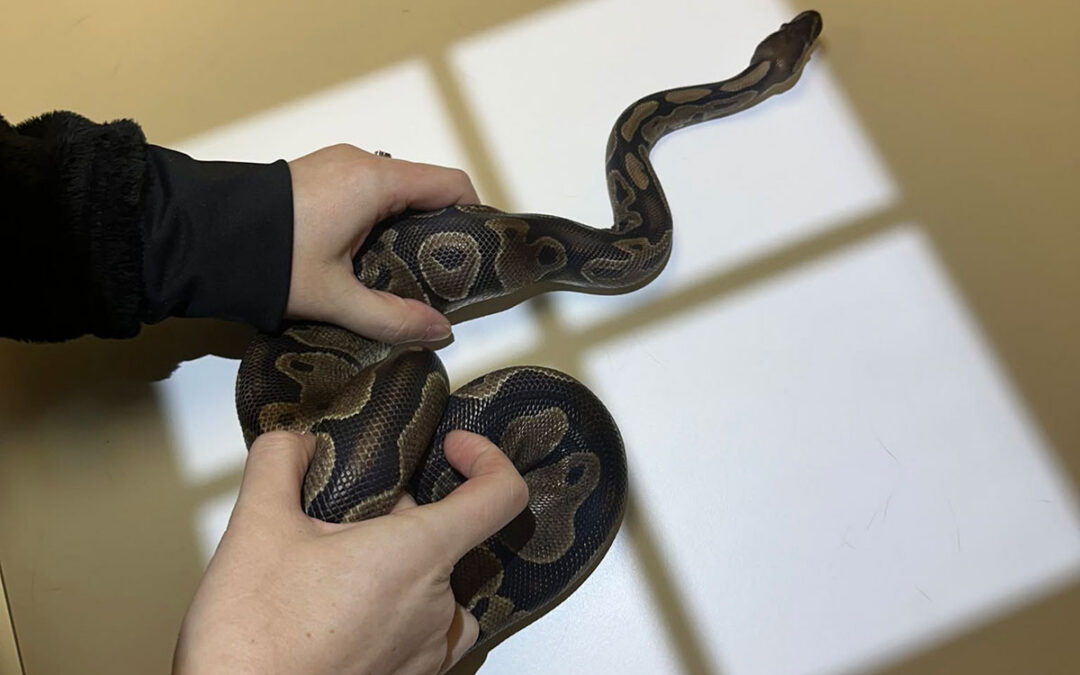
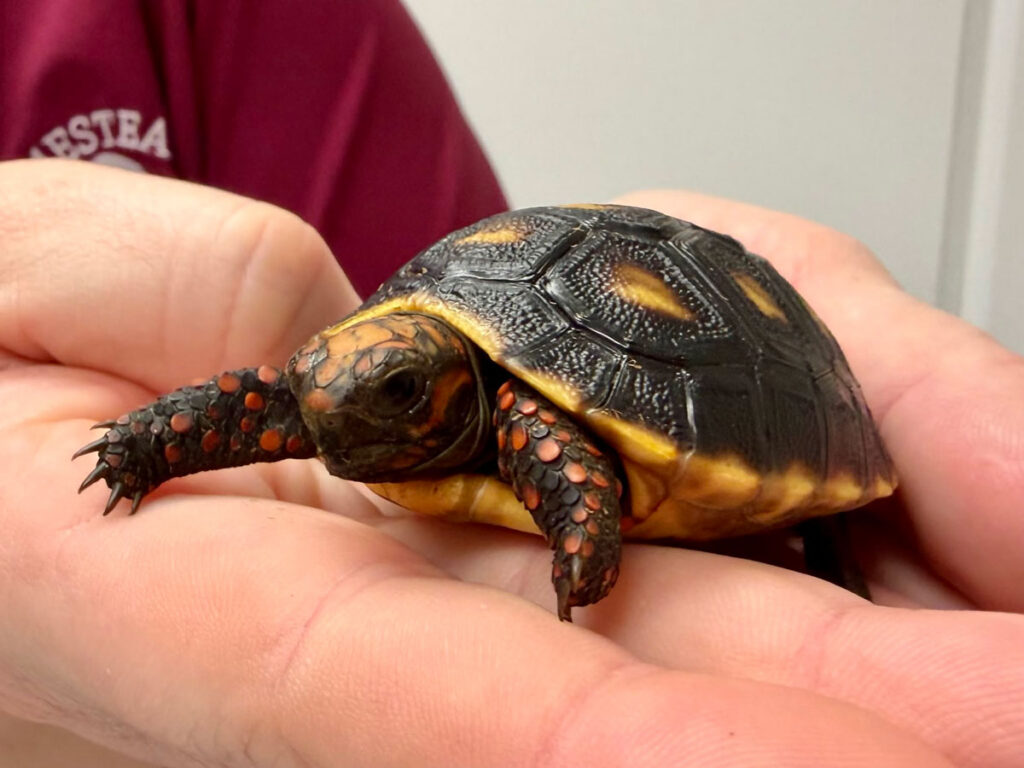
Metabolic bone disease is one of the most common reptile health concerns. It usually develops when a reptile does not receive enough calcium or proper UVB lighting.
Bones can become weak and deformed over time, leading to difficulty moving, jaw abnormalities, and fractures. Early diagnosis improves the chances of recovery.
Respiratory Infections
Snakes, turtles, and lizards can develop respiratory infections when enclosure temperatures are too low or environmental conditions are unsuitable. Symptoms may include wheezing, mucus around the nose, open-mouth breathing, or reduced activity.
Treatment often includes medication along with adjustments to the reptile’s habitat.
Skin and Shedding Problems
Healthy reptiles shed their skin regularly. Incomplete shedding can trap old skin around the toes, tail, or eyes, creating discomfort and circulation problems. Low humidity, dehydration, and underlying illness are common causes of shedding difficulties.
Digestive Disorders
Appetite loss, constipation, and intestinal blockages are among the unique pet issues that reptile owners may encounter. In some cases, reptiles accidentally consume substrate materials from their enclosures, which can interfere with normal digestion.
Parasite Infestations
Internal and external parasites affect many reptiles, especially newly acquired pets. Regular examinations by a Spencer exotic vet can identify these problems before they lead to significant weight loss or other health complications.
How an Exotic Animal Vet in Spencer, IA, Helps Small Mammals
Small mammals often require specialized care that differs from the needs of dogs and cats. An exotic animal vet in Spencer, IA may evaluate a wide range of conditions:
Dental disease
Digestive disorders
Nutrition and weight concerns
Skin and reproductive conditions
Dental Disease
Dental problems are especially common in rabbits and guinea pigs because their teeth grow continuously throughout life. When teeth become overgrown or misaligned, pets may struggle to chew, lose weight, or develop painful mouth sores. Regular examinations can identify these problems before eating becomes difficult.
Digestive Disorders
Rabbits are particularly vulnerable to gastrointestinal stasis, a condition in which the digestive tract slows or stops moving food normally. Reduced appetite, smaller droppings, and lethargy are common warning signs. Quick treatment is important since digestive problems can become serious in a short period of time.
Nutrition and Weight Concerns
Diet plays a major role in long-term health. Some pets consume too many treats or calorie-dense foods, leading to obesity and reduced activity.
Others may not receive enough fiber, vitamins, or minerals. A small animal vet in Spencer can evaluate feeding habits and recommend changes that better match a pet’s species and age.
Skin and Reproductive Conditions
Hair loss, itching, mites, and fungal infections are among the unique pet issues frequently seen in small mammals. Some animals also experience reproductive disorders, including uterine disease in female rabbits.
Routine wellness visits and early intervention can reduce the risk of complications and improve overall exotic pet care.
Frequently Asked Questions
What Warning Signs Suggest an Exotic Pet Needs Immediate Veterinary Care?
Exotic animals often hide illness until they are seriously sick, so sudden changes should never be ignored. Warning signs include difficulty breathing, seizures, severe weakness, rapid weight loss, refusal to eat, unusual swelling, bleeding, or a dramatic drop in activity.
An exotic animal vet in Spencer, IA, may also consider changes in droppings, balance, or posture to be signs that urgent medical attention is needed. Fast treatment can make a significant difference in many species.
How Do Diagnostic Tests Differ for Exotic Pets?
Diagnostic testing often varies based on the species being examined. Blood values that are normal for a bird may be very different from those of a reptile or rabbit.
Exotic pet care frequently involves specialized imaging, fecal testing, and species-specific laboratory interpretation. Veterinarians must consider anatomy, metabolism, and behavior when evaluating results and forming a diagnosis.
Exotic Animal Vet In Spencer, IA
An exotic animal vet in Spencer, IA, can diagnose species-specific conditions and guide preventive care that promotes long-term health.
At Homestead Small Animal Practice, we strive to deliver exceptional veterinary care with compassion, respect, and attention to detail. Our experienced team serves pet owners throughout Northwest Iowa, creating a safe and welcoming environment for exams, surgery, and treatment. In addition to traditional pets, Dr. Samantha Ford provides specialized care for birds, reptiles, amphibians, small mammals, pocket pets, wildlife, and zoo animals.